Foam, fiberglass and 3D printing side by side
All three can look the same once they’re painted. They differ in how much detail they hold, what they weigh, how long they take and how long they last outside.
| 3D printed | Fiberglass | Hard-coated foam | |
|---|---|---|---|
| Price, life-size | $5,000–$10,000 | $8,000–$15,000 | $4,000–$8,000 |
| Lead time | 4–6 weeks | 12–16 weeks | 3–4 weeks |
| Detail | Highest: exact product shapes, faces, text | High, from the sculpted master | Good for big, smooth shapes |
| Weight | Light (hollow) | Light to medium | Lightest |
| Outdoors | A season or covered, with UV paint and clear coat | Years in all weather | An event or a season with exterior coating |
| Copies | Reprint the same file | Cheapest per copy once the mold exists | Recarve each one |
| Metal finish | Real metal plating possible | Painted metallic | Painted metallic |
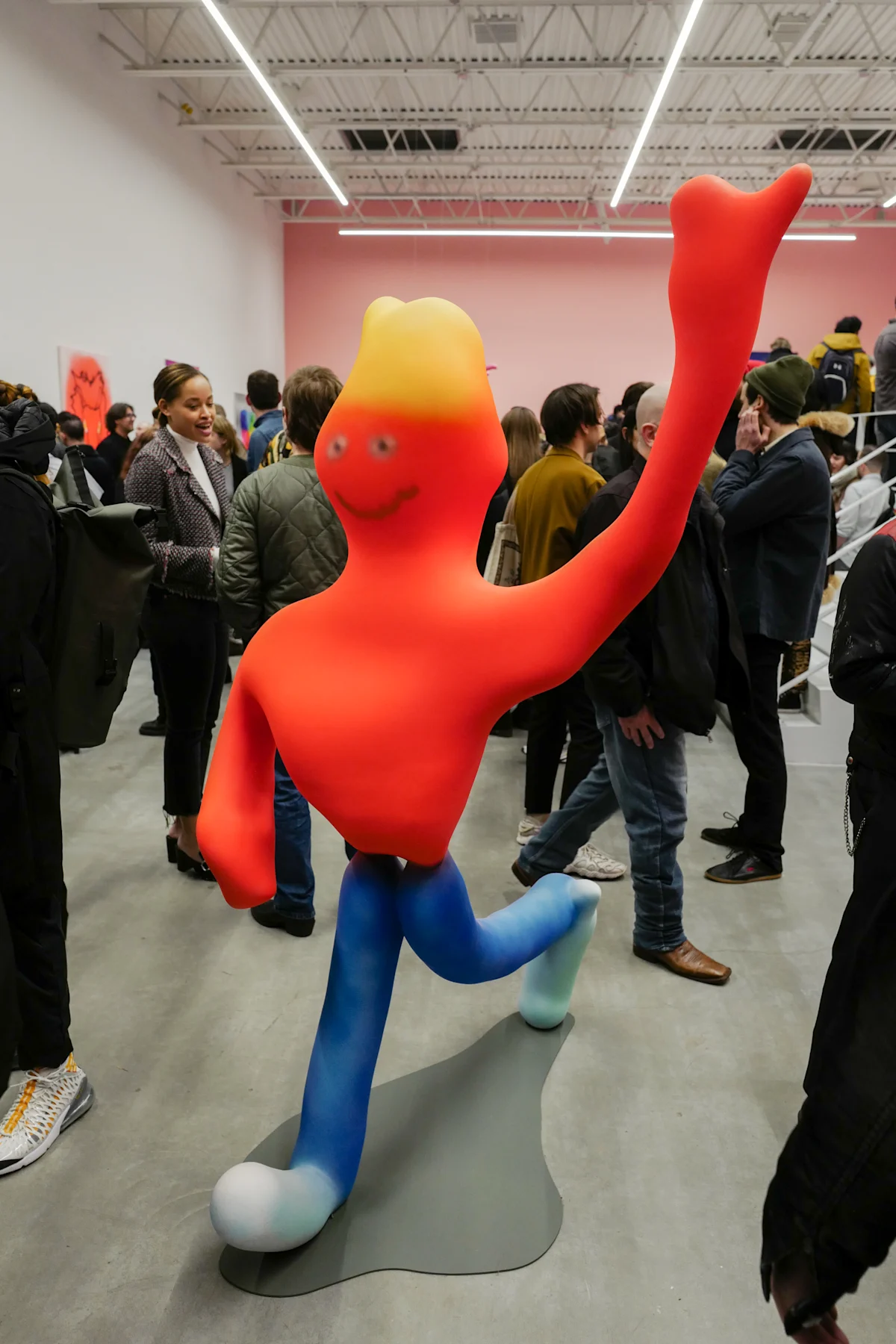
Which one for your piece?
A product replica for an activation, shoot or store
3D printed. The shape matches the product file exactly, it can be plated like real chrome or gold, and it ships in sections that fit through doors. Giant product replicas
A statue of a person, mascot or animal for a lobby or booth
3D printed. The likeness holds up close, and a hollow print is light enough to mount on a booth roof. Life-size statues
A statue outside a store, school or roadside, for years
Fiberglass. A steel frame inside, a base plate to anchor, UV paint and clear coat. It takes months because of the mold. Fiberglass statues
A one-day event piece, a set piece or giant letters
Hard-coated foam. The lightest and fastest build for big, simple shapes that only need to last the event. Giant foam letters
Ten or more of the same large piece
Fiberglass from one mold gets cheaper per copy; 3D printing repeats the same file with no tooling. We price both.
Can you mix them?
Yes, and big pieces often should. A common build is a foam or 3D printed body with 3D printed detail parts (logos, caps, faces, buttons) joined on and painted as one surface. A 3D print is also a good master for a fiberglass mold when you need copies later.
What changes the price
- Size. Price climbs faster than height: an 8–10 ft piece runs $18,000–$35,000 in fiberglass and $10,000–$20,000 in foam.
- Detail. Faces, fur, text and exact product surfaces take more modeling and hand finishing.
- Finish. Paint is the base; metal plating, Pantone matching and graphics add to it.
- Use. Outdoor, touring and climb-on pieces need thicker shells, frames and coatings.
- Design. 3D modeling starts at $300 per design; a product file or a 3D model you already have lowers it.
- Date. A close date can change the material: 3D printed and foam are weeks, fiberglass is months.
Common questions
Is 3D printing or fiberglass better for a large statue?
At PrintAWorld we recommend 3D printing for most large statues: more detail, no mold, 4–6 weeks at life-size for about $5,000–$10,000. Fiberglass is better when the statue stands outside in all weather for years or you need many copies from one mold.
Is foam or 3D printing better for a giant prop?
Foam for big, simple shapes that only need to last an event and must be as light as possible. 3D printing for exact product shapes, detail, metal plating and pieces that get handled or reused.
How long does each take?
At life-size: hard-coated foam 3–4 weeks, 3D printed 4–6 weeks (6–8 weeks plated), fiberglass 12–16 weeks, counted from your approval of the 3D model.
Which is cheapest?
Hard-coated foam is usually the least expensive per piece ($4,000–$8,000 at life-size), then 3D printed ($5,000–$10,000), then fiberglass ($8,000–$15,000). Fiberglass gets cheaper per copy when you order several from one mold.
Can a 3D printed sculpture go outside?
Yes, for a season or in a covered spot, with UV-resistant paint and a clear coat. For years outside in all weather, choose fiberglass.